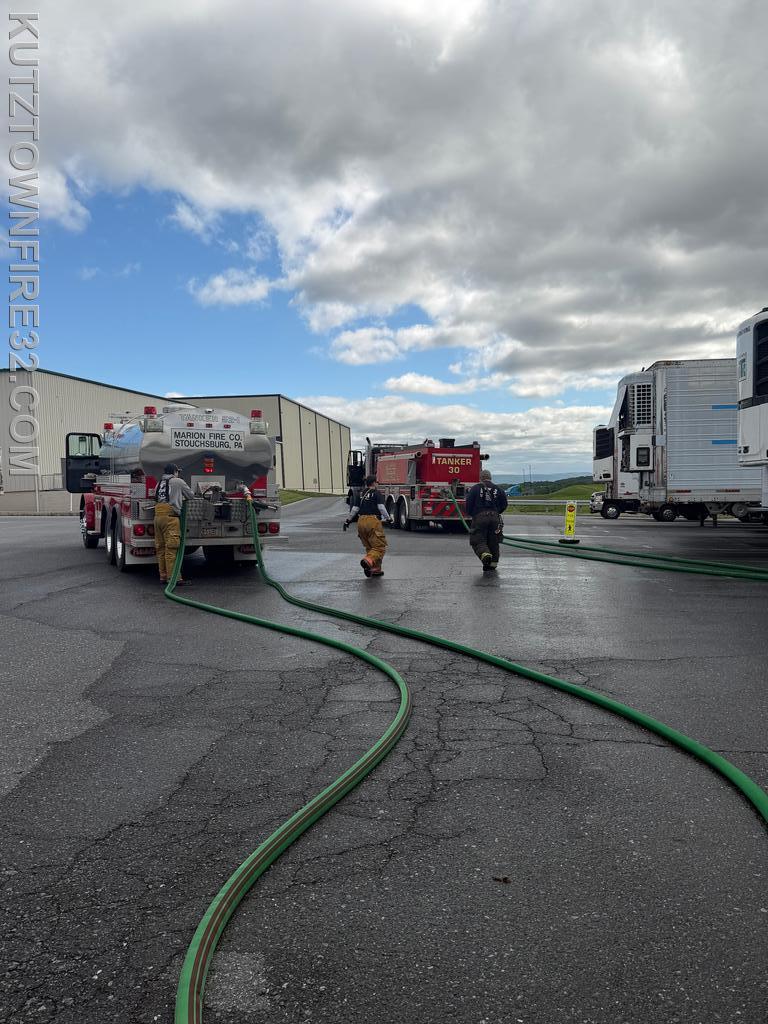
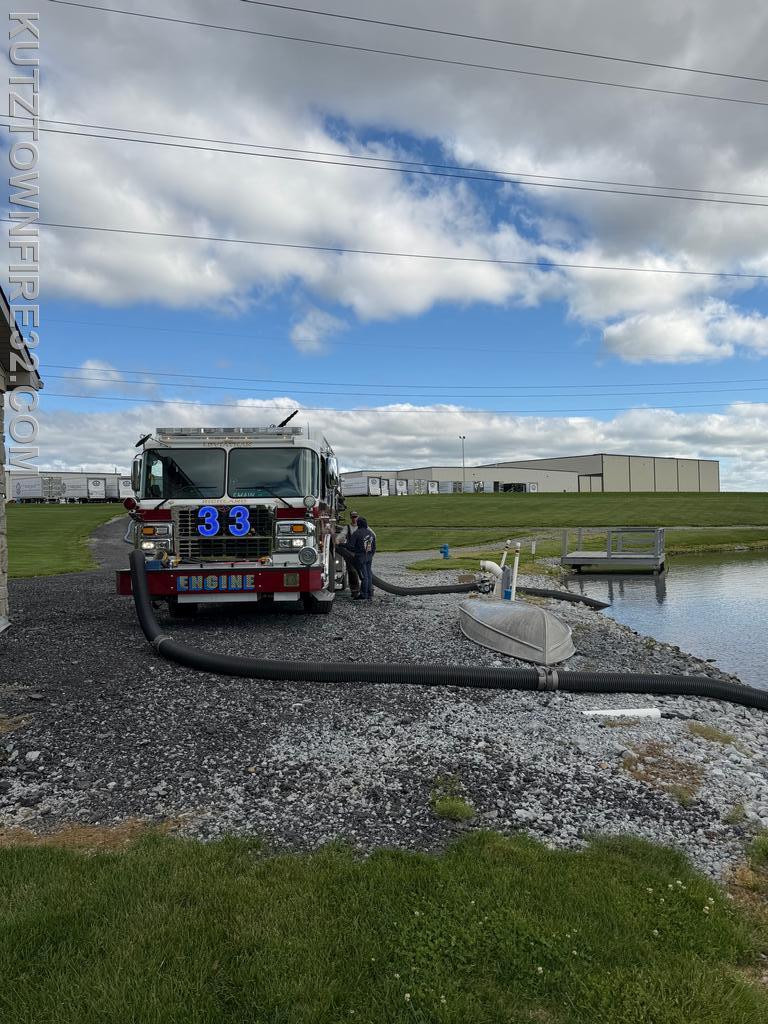
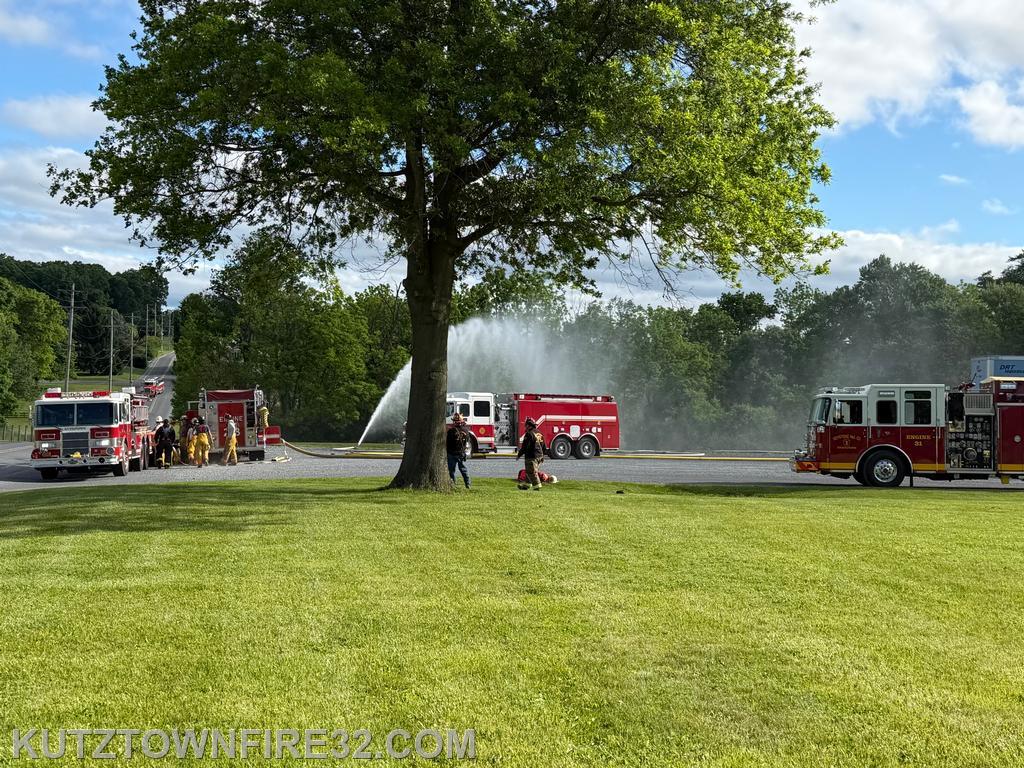
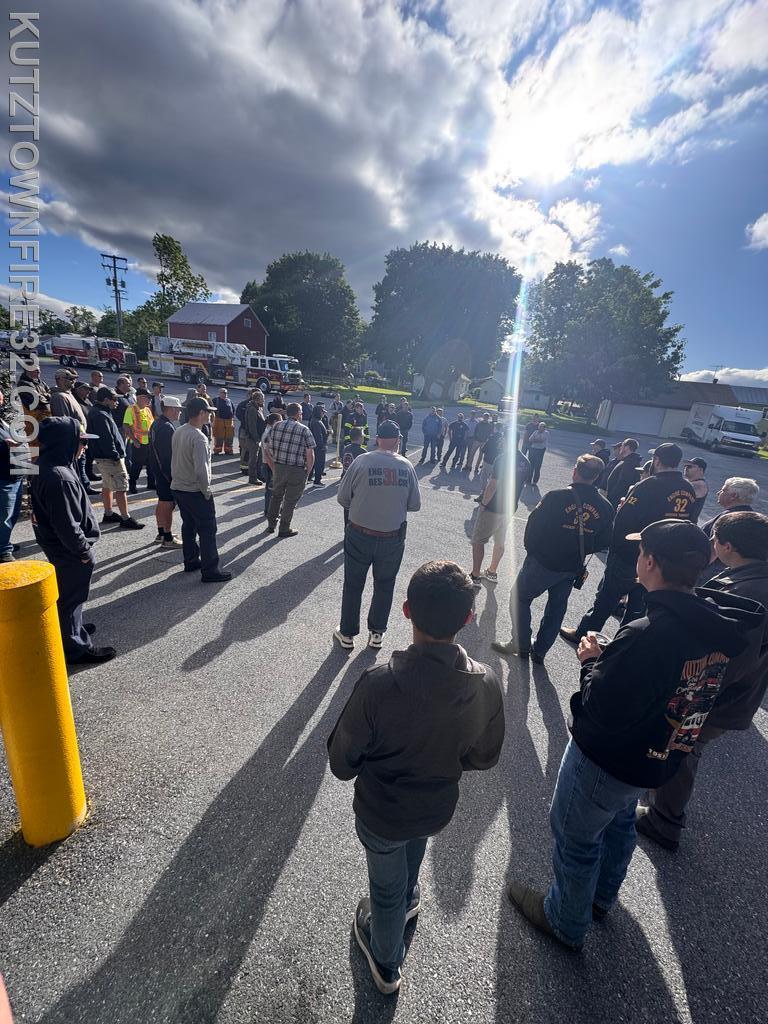
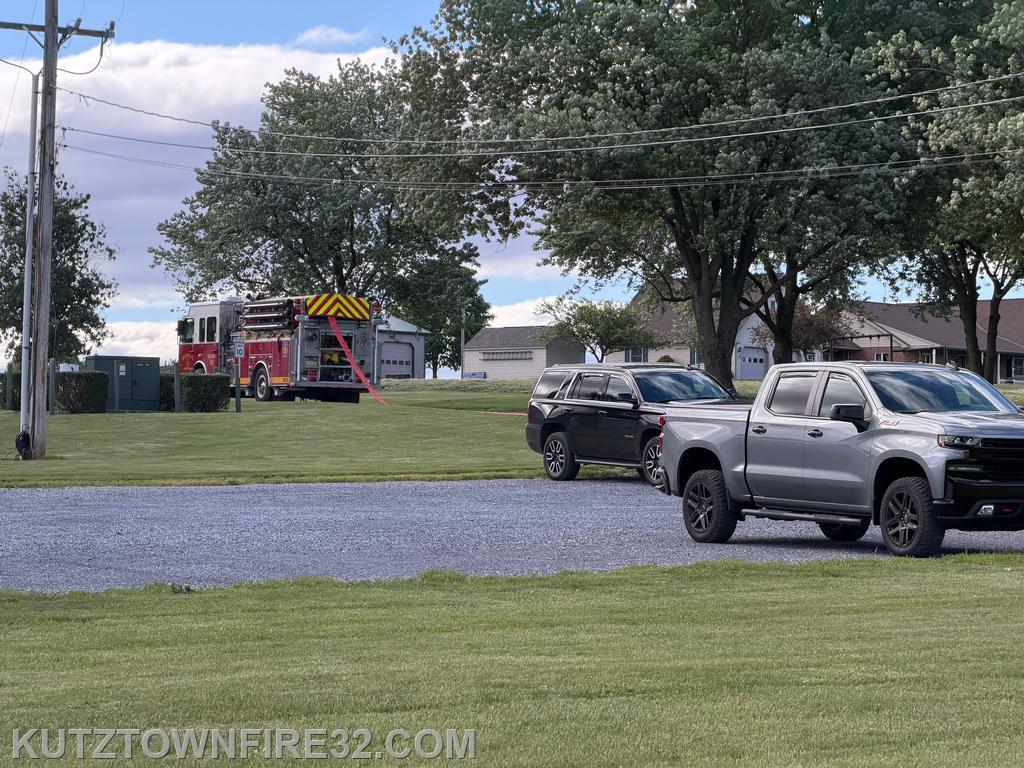
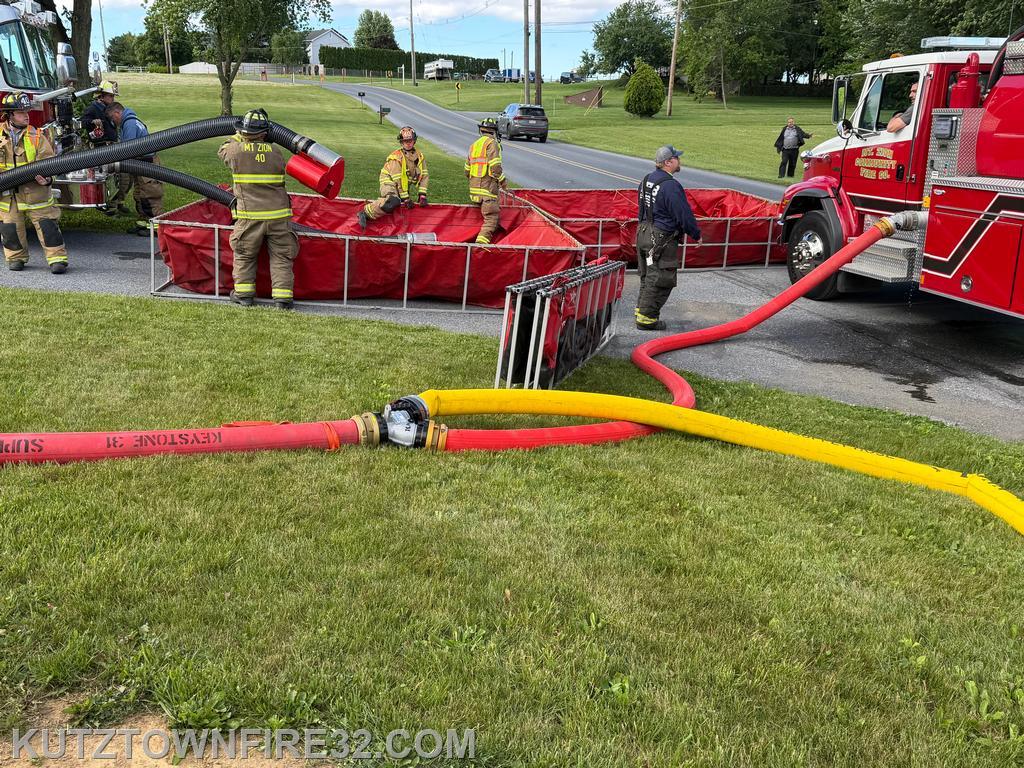
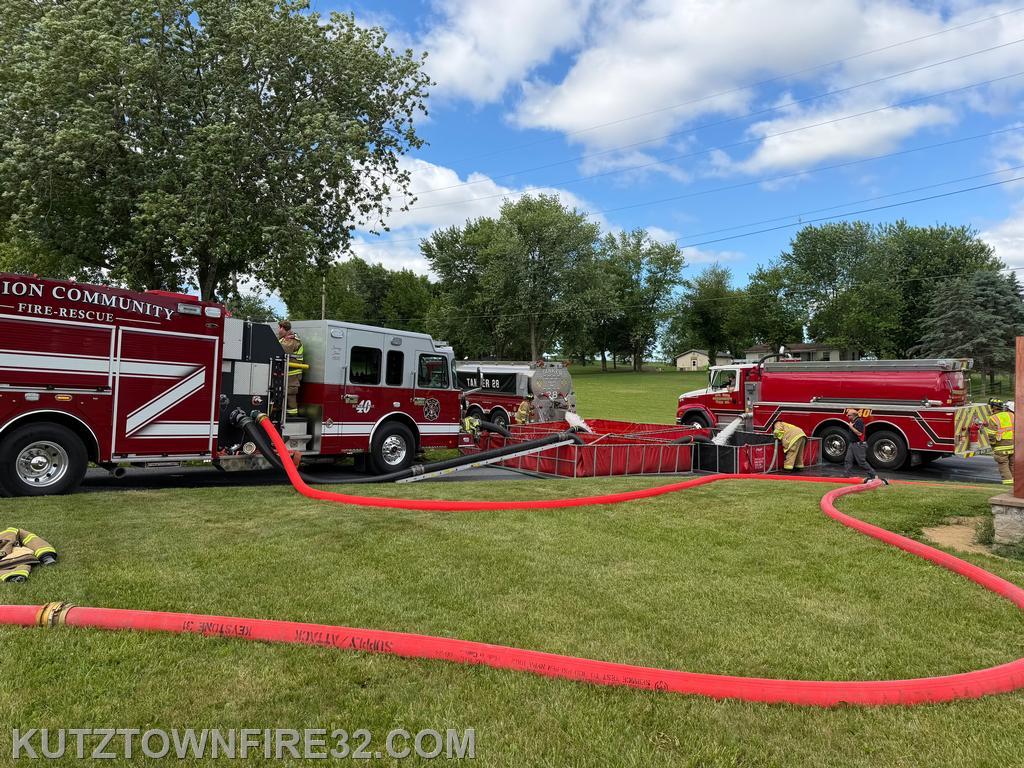
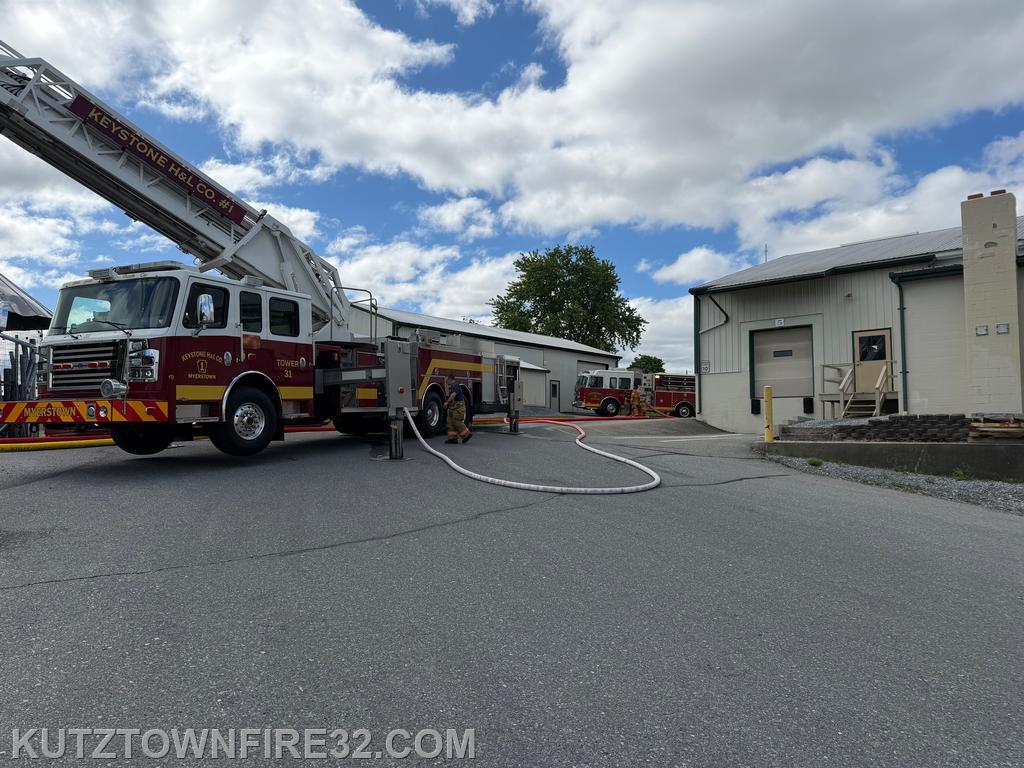
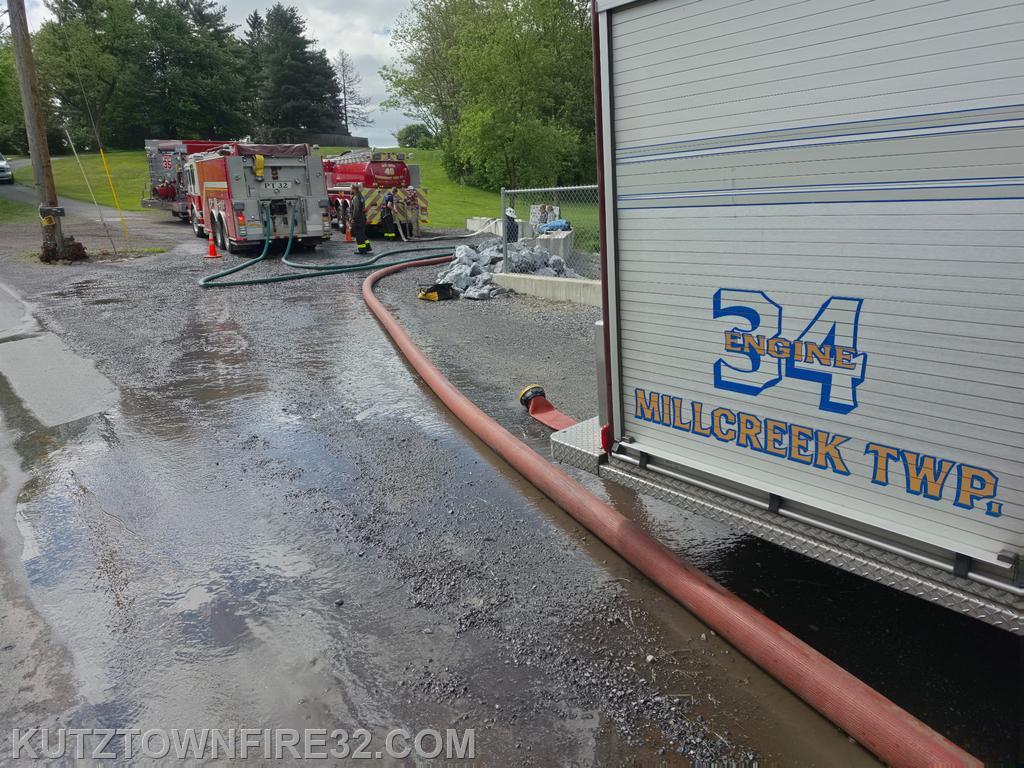
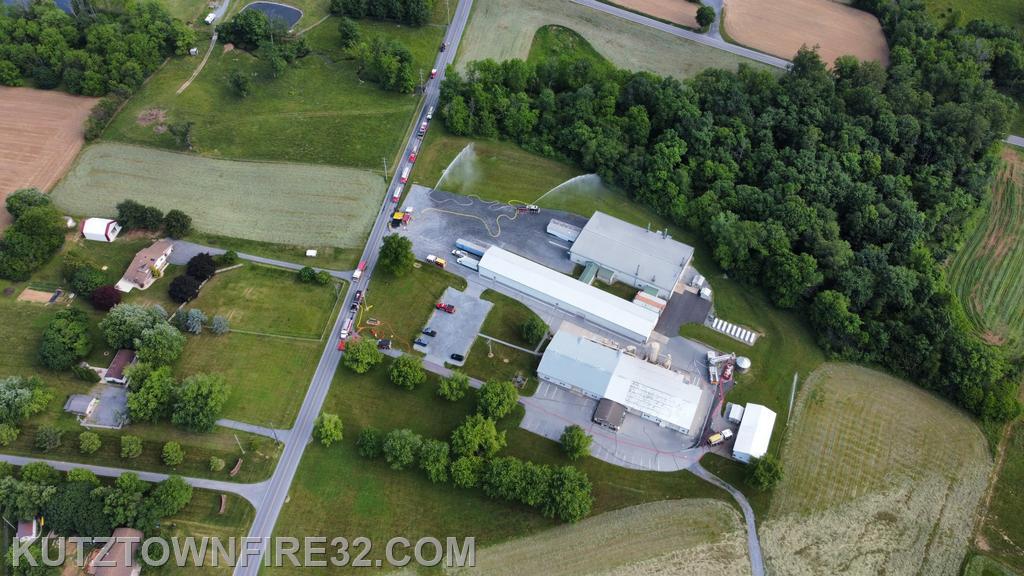
Yesterday Kutztown hosted the annual ELCO drill in the form of a rural water movement drill. This drill involved 13 local fire departments including every ELCO department, simulating a large commercial fire in a non-hydranted area of our first due. This drill consisted of two fill sites by E33, and E34 located at Dutch Valley Food Distributors, and Mt Zion Fire Company's Fire Dam. At the incident location on Houtztown Road, E32 on the "A" side of the structure assumed "fire attack" while TW31 and W31 assumed the same on the "C" side of the structure these units were supported by Berks Engine 28 and SQ40 who each had their own dumpsite. Each engine laying in to the "Fire" scene dropped a clappered siamese, allowing tankers to nurse the line while each dump site was being built out, and provided for no interruption to water flow once dumpsite transitioned from a nurse tanker operation to a proper dumpsite.
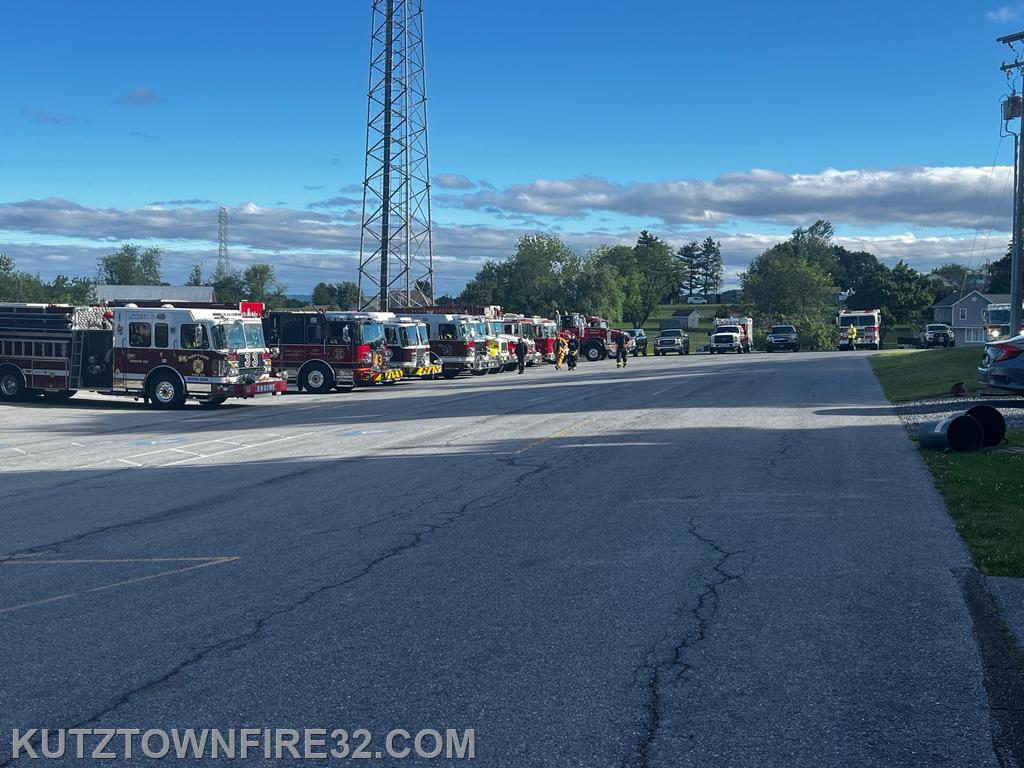
Units originally staged at station 32 until being dispatched as a 1st and 2nd alarm assignment as well as a special call for additional tankers. During the training a number of metrics were being collected at both fill sites and dump sites. All together we moved 198,200 gallons of water at the fire scene averaging 1650 gallons per minute. Fill site data shows that tankers were being filled at an average of 1130gpm with the average tanker being at the fill site just under 3 minutes showing incredible efficiency at the fill sites.
Rural water supply drills are essential because many communities including two thirds of our area lacks access to fire hydrants, requiring firefighters to transport water to emergency scenes using tanker trucks and portable tanks. These exercises help our department and our neighbors practice establishing a continuous water supply, improve firefighter safety, test equipment and procedures, enhance coordination with neighboring agencies, and build operator proficiency. Regular rural water movement training ensures firefighters can deliver the large volumes of water needed to effectively suppress fires, protect lives, and reduce property loss in areas without municipal water systems.
We thank all attending departments and look forward to improving on our next drill.